
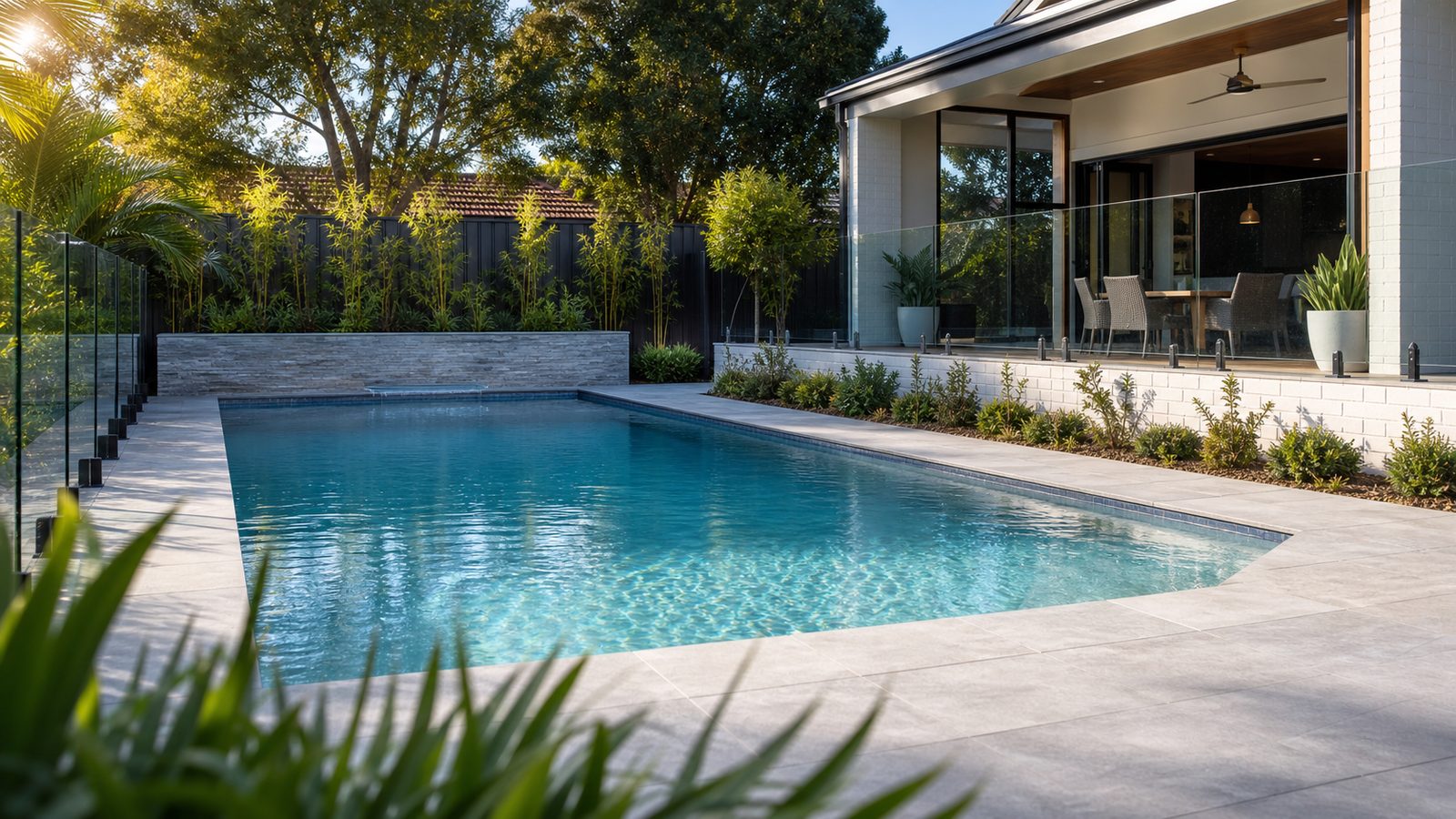
Start with the swimming pattern you actually want
Write a short heating brief before asking for a heat pump recommendation. Say whether you want comfortable weekend swims, regular exercise before work or a longer season for family use. Record when the pool is usually uncovered and who will put the cover back. An installer needs that routine as well as the pool dimensions. A proposal built around covered daytime swimming is a different offer from one intended for an uncovered pool used at irregular hours.
For a Berwick home, use your own backyard as the reference. Photograph the pool in relation to the house, boundary fences, outdoor dining area and existing equipment. If you are in Narre Warren or Cranbourne, include the same information rather than assuming the suburb determines the right installation. The useful distinction is an exposed pool with open equipment space versus a sheltered courtyard with a narrow side passage. A postcode alone cannot answer either the heating or placement question.
Ask the supplier to put the assumptions beside the recommended model: pool dimensions, intended water temperature, swimming season, daily operating window and cover use. Request performance information for the conditions relevant to your brief. AstralPool's Pinnacle specifications, for example, list different outputs for different air conditions. A headline capacity is not a promise that your pool will reach a chosen temperature by a chosen time.
Reserve the air space, not just the cabinet footprint
A heat pump location needs to be checked against the installation manual for the exact unit. Record the model reference, which way its fan discharges and the specified clearances. AstralPool's heat-pump sizing advice calls for an outdoor position with good airflow and no obstructions around the fan. This is why a cabinet fitting neatly into an alcove does not establish that the alcove is suitable.
On the site sketch, draw the space that must stay clear as well as the unit itself. Then add the things that are often missing from equipment drawings: a gate opening, the clothesline when extended, a barbecue cover, garden bins and the mature size of nearby planting. A location that only works with all those objects removed is unlikely to stay clear during normal use. Decide where those objects will live before approving the equipment position.
Do not order a decorative enclosure first and ask the installer to make the heat pump fit afterwards. Ask whether a screen is compatible with the proposed unit and request the final arrangement in writing. A screen, roof or change of fan direction may require a different model or location. Keep the conversation about the complete installation. The photo of a similar-looking screened unit at another house does not show its internal spacing or prove it was installed correctly.
Look at the neighbour's window as well as your own patio
Mark bedroom and living-room windows near each possible position. Include your neighbours' windows that you can see from your property without entering their land. Note where people sit outside and whether the side passage faces a wall or open garden. This gives the installer a useful starting point for discussing noise. Choosing the place least visible from your kitchen can simply move the problem closer to someone else's bedroom.
Victoria's EPA residential-noise guidance includes pool pumps and heating equipment, with restrictions that depend on the equipment and circumstances. Noise can also be unreasonable outside prohibited times. Have the installer check the current guidance for your proposed system and schedule; do not assume a daytime timer or a brochure's quiet-mode label guarantees compliance.
Ask what the published sound figure represents and at what distance and operating condition it was measured. Then ask how the supplier has assessed the actual position. An answer that only repeats a marketing description does not resolve the siting question. If noise is likely to be contentious, settle how it will be assessed before equipment is ordered. A written location drawing and agreed operating brief are more useful than an informal assurance that nobody will hear it.
The best location must also work with the existing system
Photograph the whole equipment area, then take readable pictures of the pump, filter and controller labels. Include the pipework entering and leaving the area. Avoid moving valves or opening electrical covers to get a better picture. Ask the installer to identify which existing components can remain and which connections need alteration. A recommendation should explain how the heater will work with the filtration system, not just list the new unit.
Where a candidate location is away from the current pad, ask for the proposed pipe and cable routes on the drawing. Identify paving that would be lifted, walls that would be penetrated and planted areas that would be disturbed. Request a clear reinstatement scope. You need to know whether the quote ends with the equipment connected or includes restoring the path, replacing a garden edge and making the finished area usable again.
Electrical supply and protective arrangements need assessment by the appropriate qualified installer. Ask who is responsible for that work and what information is still needed. Also ask how water from the unit will be managed and how the controls will be accessed. Do not assume a nearby outdoor socket, an existing drain or the old pump timer answers those questions. Record unresolved items as conditions of the proposal rather than leaving them until installation day.
Compare two candidate positions on the same basis
It is worth asking for an alternative position even when the first location looks obvious. One option may have a simpler pipe route but place the fan beside a sitting area. Another may preserve the patio but require changes to landscaping. Put both on one sketch and ask the installer to explain which constraints rule an option out. This turns an aesthetic disagreement into a specific design discussion.
| Candidate | What to establish before selection |
|---|---|
| Beside the current filter | Room for the heater's air clearances and future filter removal, not just another cabinet. |
| Along a side passage | Unobstructed access, nearby windows, fan direction and the position of gates and stored items. |
| In a garden equipment zone | A maintainable pipe route, stable support, drainage and planting that will stay clear. |
Ask for each option to show installation inclusions separately from possible later work. If a screen is optional, it should not be essential to an unproven noise solution. If paving reinstatement is excluded, identify the actual area affected. You can then compare complete arrangements without confusing a lower equipment-only figure with a less expensive finished job. Use the existing quote comparison guide for the broader contract discussion.
For a useful location comparison, ask each bidder to mark the fan direction on the same backyard photograph. One may be proposing to blow air towards a path while another has assumed the unit faces the garden. Ask which face needs access for servicing and whether the proposed screen is included in that assessment. These small differences can explain why apparently similar proposals require different amounts of space. Keep the marked photograph with the final model selection so the installer is working from the arrangement you accepted.
If you have rooftop solar, describe when you expect to use it for heating, but do not turn that preference into a promise of free operation. Ask the supplier how the heating schedule would interact with the filtration schedule and the controls already installed. Confirm who will set those schedules and whether you can change them yourself. Your electricity tariff and household consumption belong in any separate running-cost calculation; they cannot be inferred from the heater badge.
Leave room for the person who will service it
Ask the installer to show where someone will stand to read the display, open the service panel and disconnect the unit when replacement is eventually needed. Check whether a screen can be removed without dismantling a fence or cutting plants back. Keep the filter lid, pump basket and electrical isolation points accessible too. A new heater should not make an ordinary filter clean harder for the person who maintains the pool.
At handover, have the normal heating routine demonstrated from a stopped system. Ask which controller requests heat, which schedule governs circulation, how to stop heating without losing the intended filtration routine and where fault messages appear. Take your own notes using the names printed on the controls. If different household members will operate the system, make sure the explanation works for someone who was not involved in selecting the equipment.
Ask what observations warrant a service call and what information to provide. A useful fault report includes the model, displayed message, current mode and what changed before the problem appeared. Keep installation drawings, manuals and commissioning records together. These are also useful if you later replace the filter, add automation or change the equipment enclosure: the next contractor can see the original arrangement instead of guessing why everything was placed there.
Questions homeowners ask before choosing the position
Can I buy the heat pump now and decide the location later?
Ask for a site-fit assessment first. A unit selected only from pool size may leave awkward questions about airflow, access, electrical work or sound. If you already own a unit, provide its exact model and manual before seeking an installation quote. The installer can then assess that product rather than giving a general answer about heat pumps. Do not remove packaging or alter equipment simply to make it look easier to install.
Does a longer operating schedule mean I can choose a smaller heater?
Have the supplier assess that trade-off against your swimming brief and the permitted operating conditions. A longer schedule is only useful if it fits the household, neighbours and the equipment system. Ask the proposal to show what happens when the available operating window is shorter. This makes the limitation visible before purchase instead of discovering that the selected unit depends on hours you cannot practically use.
Should I sort out the pool cover at the same time?
Yes, include your actual cover routine in the heating brief. If the existing blanket stays off because the roller blocks the path, resolve that handling problem before accepting a proposal that assumes frequent cover use. The cover and roller layout guide helps you compare storage positions. You do not need a matching brand bundle; you need a heating proposal based on equipment and habits that will exist at your home.